Thursday, May 22, 2014

Biography


               Grote Reber was born on December 22, 1911 in Wheaton, Illinois and died December 20th, 2002 in Ouse Tasmania, Australia. Mr. Grote Reber having been raised in Chicago went to and graduated from The Armour Institure of Technology in 1933 with a degree in electrical engineering.  He had always had a passion for Radio and exploring the world through a different light, he received his 1st radio license when he was just 16. He was really inspired by Karl Jansky and his work in the radio field of astronomy, he was fascinated with his discover of radio waves from our galaxy.  He theorized that radio waves could be found outside of our galaxy just as they were in our own.
                In his early years getting out of college Grote tried to get a job with Karl Jansky working at the Bell Labs, but was unable to due to the Great Depression being at its high point at that time, no one was hiring.  It was then that Grote decided to build his 1st satellite the summer of 37’, it was 31 feet across and at the time was the largest and most advanced radio telescope in the world.  Using his knowledge of electrical engineering Grote knew that the telescope would need a curved face in order to focus the radio waves into one readable point.  Grote discovered astronomical objects that emit light in the radio spectrum such as the ones in Cygnus and Cassiopeia.  He was the 1st person in the world to scan the night sky in Radio waves in 1938 to 2943, he published his results in both fields engineering and astronomy afterwards. His later work revolved around very low frequency waves, ones that can on penetrate Earth’s ionosphere at times of low solar activity, leading to his final resting place Tasmania, Australia where he lived for many years.

            Mr. Grote Reber was inducted as a member of the American Astronomical Society. In 1962 he received the Bruce Gold medal of the Astronomical Society of the Pacific and was also the American Society Russel Lecturer. Mr. Reber received the Elliot gold medal from the Franklin Institute of Pennsylvania, Philadelphia.  In 1983, he was awarded with the Jackson-Gwilt Medal of the Royal Astronomical Society.  Mr. Reber still lives on, in his legacy; he has an asteroid named after him, they made a Grote Reber Medal, and a Grote Reber Museum was opened at the Mount Pleasant Radio Observatory,  Cambridge, Tasmania, opened the 20th of January 2008.

APOD

Sun Halo in Cambodia.

A sun halo is caused by the refraction of little ice crystals up in the clouds aimed exactly at a 22' angle. This phenomenon occurs fairly often actually.

APOD

Red Moon w/ green laser.

This photo is of a the moon during its total lunar eclipse. The date was of the photo was April 15th. The green laser is due to a science experiment conducted by UC San Diego to measure the exact distance to the moon in millimeters. This laser was used by measuring the displacement of the beam in space.

APOD

The Flame Nebula
The Flame Nebula belongs to a group of forming stars in the Orion's belt nebula. It is visible in X-ray but not in optical light due to the dust blocking the light. The age of the cluster has an age range from 200,000 years old to 1.5 million years young.

Friday, April 4, 2014

APOD

These bright colorful streams in our night sky are massive illuminated gas clouds, reminents of a massive super nova.  The light from the super nova probably reached Earth around 5,000 years ago.  This gas cloud resides in Cygnus and spans to about 3 degrees, 6 times the diameter of the full moon.

Monday, March 24, 2014

Bio- Asaph Hall

Dino Bever
Mr. Dacey
Astronomy Honors Period. 5
March 23, 2014
Asaph Hall
http://upload.wikimedia.org/wikipedia/commons/6/6e/HallPortrait.jpg
            Asaph Hall the 3rd was born on the 15th of October in 1829 in Goshen, Connecticut.  Asaph died the 22nd of November, 1907 in Annapolis, Maryland.  He was forced to grow up early as a child as his father died at the age of 13, so he had to help provide for his family. Hall’s education suffered as he dropped out of school at the age of 16 to become an apprentice to a carpenter. Asaph Hall in his later years in his life had four children with his wife Angeline Hall, who happened to be his ex-Geometry teacher/ German teacher whilst he attended the Central College in McGrawville. His four children were Asaph Hall Jr. who would go on to follow in his father’ footsteps becoming a famous astronomer, Samuel Stickney Hall, a life insurance worker, Angelo Hall a professor of mathematics at the US Naval Academy, and Percival Hall who became the president of Gallaudet University.
 Asaph Hall enrolled at the Central College in McGrwaville, New York, studying mathematics; only for a brief period of time though, as he quickly found work at Harvard working in its observatory.   For almost being completely self-taught in the arts of physics and astronomy Hall made great leaps in many subjects, publishing almost 500 papers. His papers covering a broad range of subjects such as: double stars, Mercury’s perihelion, natural satellites, the mass of Mars, soar and stellar parallax, Saturn’s rings, and even the value of Pi. In 1877 on the 15th and the 17th of August, with the assistance of the USNO 26-inch telescope, the largest refracting telescope in the world at that time, Asaph Hall discovered Phobos and Deimos, the two Martian moons.

For his discoveries Hall was given the Gold Medal of the Royal Astronomical Society in 1879, in 1893 the Arago Medal, and in 1896 he was made a chevalier in the Ordre national de Legion d’honneur.  His work on Pi would later go on to be used in the Manhattan project by Nicholas Metropolis, being renamed the Monte Carlo method. Due to his discoveries and life’s works Hall was honored with having named after him the Hall crater on the moon as well as the Hall crater on the Martian Moon Phobos, in addition to asteroid 3299 Hall.  

Sunday, March 23, 2014

APOD

This image is one of a  black hole sucking in a massive gas cloud. This reveals attributes of both the gas being sucked in and the black hole. The gas cloud is emitting two beams of light from it's poles at a very high frequency 450 times per second actually.  From the black hole we can observe its mass which is about 7 times the mass of our sun.

Observations

3/23/14
1/2 hour from 8:00-8:30
Tools used: Naked eye
Constellations seen: Orion, Canis Major/ minor, Gemini, Taurus, and Perseus
1st magnetude stars: Beatleguse, Rigles, Serius A, Procyon, Castor, Pollox, Algol
Other mentionable objects: Jupiter, Platese, Hyades (don't know how to spell them), Orion Nebula, and Orion's Belt

Observations

3/22/14
1 hour from 9:00-10:00
Tools used: Sky Guide app, Naked eye
Constellations seen: Orion, Canis Major, Taurus
1st magnitude stars: Beatleguse, Rigle, Serius A
Other objects: Pladese, Hyades (don't know how to spell them), Orion Nebula, and Orion's Belt

Observations

3/21/14 9:00-10:00
Tools used:  Naked Eye
Constellations: Orion, Taurus, Canis Major
1st Magnitude stars: Rigel, Beatleguse, Serious A
Other Objects: Playetes, Hyades (still don't know how to spell them) Horse Head Nebula, Orion's Belt

Friday, March 21, 2014

Observation

3/20/14
1 hour 9:00-10:00
Tools used: Naked eye
Constelations: Orion, Gemini, and Canis Major
1st magnitude stars: Rigel, Beatleguse, Castor, Pollox, and Serius A
Mentionable objects: Jupiter, Horsehead Nebula, Orions belt

Observations

3/19/14
1 hour from 9:00-10:00
Tools used: Sky Guide app, Naked eye
Constellations seen: Orion, Canis Major/ minor, Gemini, Taurus, and Perseus
1st magnetude stars: Beatleguse, Rigles, Serius A, Procyon, Castor, Pollox, Algol
Other mentionable objects: Jupiter, Pleadies, Hyades (don't know how to spell them), Orion Nebula, and Orion's Belt

APOD

Taekn February 19th this stunning picture of the highest peak of Mount Sharp known as Aeolis peak standing at a wooping 5.5 kilometers.  This 3d picture of the Martian land scape was taken by roving Curiosity's Navcam during a break in one of its runs.

APOD

Great picture of the early night sky on March 1st taken from Sea Isle City, New Jersey, U.S. of A.. In this pictutre our sister planet, Venus is clearly visble as is the Mily Way.

Friday, January 24, 2014

APOD


There is a new bright supernova in M28 more commonly known as the Cigar galaxy, by the big dipper or rather Ursa Minor. M28 is about 12 million light years away meaning the "new" supernova we're seeing acually happened 12 million years ago. The super nova was caused by a white dwarf accretung matter of a companion star. Despite it's new formation it is already the brightest celestial object in M28, scientists believe it will reach maximum brightness in about 2 weeks. It is already viewable with a low powered telescope easily in the night sky.

Friday, January 17, 2014

APOD

Based off of Jules Vern's "From Earth to the Moon" Nasa's picture of the day was a commemoration to a 14 minute French film by Georges Melies called "A trip to the Moon". The movie is from the year 1902, it seems that the great interest in going to the Moon has been around for quite a while. This image from the movie has become iconic symbol for both science fiction lovers and astronomers.

Saturday, January 11, 2014

Date: December 25thrd 2013
Time: 9:00-120:30
Sky Conditions: Clear night's sky
Instruments used: pair of binoculars and sky guide app
Planets: Jupiter 
Bright stars: Sirius
Constellations noted: Orion, Taurus, Canes Major, Triangulum
Binary Stars: None


Deep Sky objects: None
Date: December 23rd 2013
Time: 10:00-12:30
Sky Conditions: Clear night's sky
Instruments used: pair of binoculars and sky guide app
Planets: Jupiter 
Bright stars: Sirius
Constellations noted: Orion, Taurus, Canes Major, Triangulum
Binary Stars: None
Deep Sky objects: None


Observations

Date: December 17th 2013
Time: 830-10:30
Sky Conditions: Kinda cloudy but not too bad
Instruments used: pair of binoculars and sky guide app
Planets: Jupiter 
Bright stars: Sirius
Constellations noted: Orion, Andromeda, Pegasus, Canes Major
Binary Stars: None
Deep Sky objects: Andromeda Galaxy


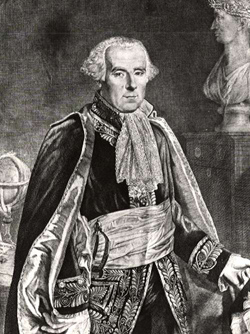
Simon-Pierre Laplace


Pierre-Simon Laplace

Dino Bever
Mr. Dacey
Astronomy Period 4
January 10, 2014
Simon Pierre Laplace
            Pierre-Simon , Marquis de Laplace was born on March 23rd, 1749, in Beaumount-en-Auge, Nromandy, France, HE died on March 5th, 1827 at the age of 78 in Paris. He was an extremely well known French Mathematician, Astronomer, and Physicist who is best known for his investigation to the stability of the solar system. Laplace successfully accounted for all the observed abnormalities of the planets from their theoretical orbits by applying Sir Isaac Newton’s theory of gravitation to the solar system, and he developed a conceptual view of evolutionary change in the structure of the solar system. He also demonstrated the usefulness of probability for interpreting the scientific data. Simon Pierre Laplace grew up poor, being the son of a peasant farmer; and little is known of his early life with the exception that he demonstrated great mathematical adroitness at the military academy of Beaumont. In 1766 Laplace entered the University of Caen, but left only a year later for Paris without a degree from the University.  He taught at the Ecole of Militaire with a letter of recommendation by Jean d’Alembert from 1769-1776.
             Laplace began his life’s work, applying Newtonian Gravitation to the Solar System in 1773 when he began to wonder why Jupiter’s orbit seemed to be constantly shrinking while Saturn’s appeared to be expanding. In 1773 Simon won the associate membership in the French Academy of sciences because of his astronomical advancements, after he announced the invariability of planetary motions. In 778 Laplce proved after a careful examination of all planetary perturbations that all eccentricities and inclinations of planetary orbits to each other will always remain small, constant, and self-correcting as opposed to the theory that Newton had put into place, that the effects of perturbations were therefore conservative and periodic, not cumulative, and disruptive. In 1796 Laplace published Exposition du Systéme du monde a moderately popular book about his work on celestial mechanics; the book also included his “Nebular Hypothesis” his theory on the origin of the Solar System.

            Simon pierre Laplace was one of the greatest mathematicians and astronomers to have lived his work in removing any uncertainty within the theoretical description of the forming of the Solar System. His work on Bayesian Probability was ground breaking and is still uniformly taught to students at college. During his time as president of the Board of Longitude, after escaping imprisonment and execution during the French Revolution he assisted in the organization of the Metric System. Simon Pierre Laplace touched all of our lives in some subtle way even if we don’t realize it, had he not done some of the things he had we would be living in a different world.